Best Lumbar Spinal Stenosis Treatment in Delhi NCR: Causes, Symptoms,
If you have been waking up to relentless lower back pain, feeling your legs go numb halfway through a walk, or noticing that standing upright feels like a battle, you are not alone. Millions of people across India live with these symptoms daily, and many do not know that a specific, treatable spinal condition may be at the root of it all. The best lumbar spinal stenosis treatment in Delhi NCR is now more accessible than ever, and understanding your condition is the first step towards reclaiming your quality of life.
What Is Lumbar Spinal Stenosis?
Lumbar spinal stenosis is a condition in which the spinal canal in the lower back (the lumbar region) becomes abnormally narrow, placing pressure on the spinal cord and the surrounding nerve roots. Think of your spinal canal as a tunnel: when that tunnel shrinks, due to age, injury, or structural changes, the nerves inside become compressed, leading to a cascade of painful and debilitating symptoms.
The lumbar spine is made up of five vertebrae (L1-L5), which are stacked between the thoracic spine and the sacrum. Soft, cushion-like discs reside between each vertebra, and the bundle of nerves that regulates sensation and movement in your legs, hips, and lower body passes via the central canal. When this canal narrows, a process known as spinal canal narrowing, the nerves have less room to function, and the ensuing nerve compression causes everything from localized back discomfort to shooting leg weakness.
Causes of Lumbar Spinal Stenosis
Lumbar spinal stenosis rarely happens overnight. In most cases, it develops gradually over the years. The most common causes include:
- Age-related degeneration — Occurs as the spinal discs lose water content, joints tighten, and cartilage wears away. This natural degenerative process is the major cause of stenosis among persons over the age of 50.
- Herniated discs — When the soft inner substance of a spinal disc bulges outward, it can encroach on the spinal canal and irritate adjacent nerves.
- Bone spurs (osteophytes) — Overgrown bony projections that occur along the vertebral margins in reaction to joint tension or arthritis. These bone spurs are frequently seen to cause spinal canal constriction.
- Thickened ligaments — Over time, the ligaments that keep the spine together can stiffen and expand, folding inward into the spinal canal and limiting available space.
- Spinal injuries — Trauma from accidents, falls, or sports injuries can fracture or dislocate vertebrae, creating sudden or gradual canal narrowing.
- Congenital spinal canal narrowing — Some individuals are simply born with a naturally smaller spinal canal, making them more susceptible to symptoms even without significant degeneration.
Symptoms of Lumbar Spinal Stenosis
Recognising the signs early can make a significant difference in treatment outcomes. The hallmark symptoms of lumbar spinal stenosis include:
- Lower back pain — A dull, persistent soreness in the lower back that can intensify with extended standing or movement.
- Leg pain and sciatica-like symptoms — Burning, shooting pain radiating from the lower back down through the buttocks and into one or both legs.
- Tingling and numbness — A pins and needles sensation or loss of feeling in the thighs, calves, or foot.
- Leg weakness — Difficulty elevating the foot, frequent stumbling, or an overall feeling of leg heaviness.
- Difficulty walking — Many patients report that even short distances of walking cause severe discomfort or weariness in their legs.
- Neurogenic claudication — Perhaps the most characteristic symptom: leg pain and cramping that comes on during walking and is relieved by sitting down, bending forward, or resting. This differentiates stenosis from vascular claudication, which has a different origin.
- Bladder or bowel changes — In severe cases, nerve compression may affect bladder or bowel control. This warrants immediate medical attention.
An important distinguishing feature: many patients notice that leaning forward, such as when pushing a trolley in a supermarket, provides relief. This is because forward flexion temporarily opens the spinal canal.
When Should You See a Spine Specialist?
Many patients tolerate discomfort for too long before seeking professional guidance. You should consider consulting a spine specialist if:
- Despite rest and simple pain medication, you’ve had back or leg pain for over six weeks.
- Your legs gradually weaken or become numb.
- You are increasingly unable to walk or stand for routine everyday activities.
- If you detect any changes in bladder or bowel function, this is a red flag sign that should be investigated immediately.
- Your quality of life, sleep, and movement are all impaired.
Who is the best doctor to see for spinal stenosis?
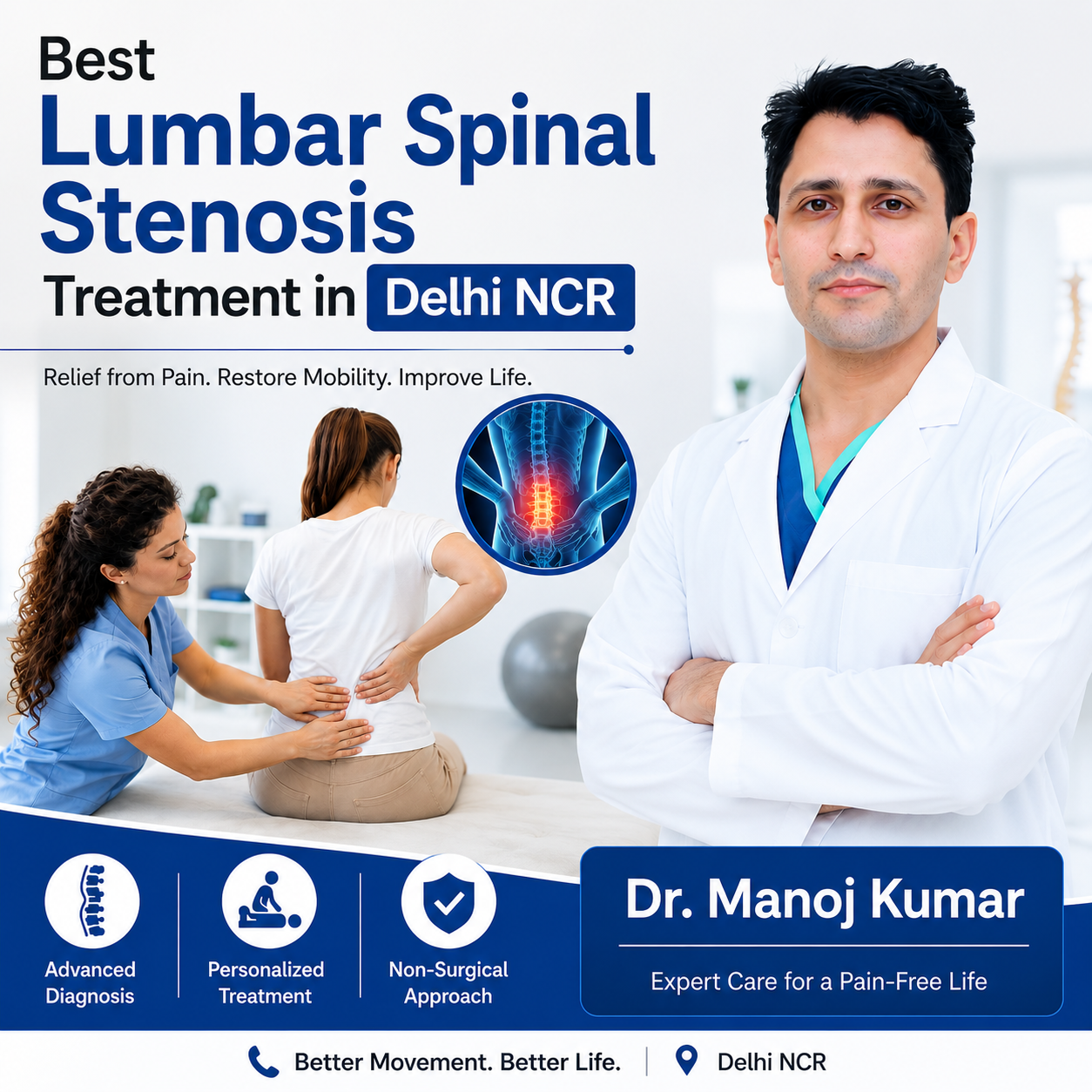
The response is determined by the severity and intricacy of your issue. For the majority of patients, a dedicated spine specialist, ideally one who has experience with both non-surgical and surgical management of spinal diseases, is the best place to start. Dr Manoj Kumar Spine Specialist is well-known in the Delhi NCR as one of the most reputable names in spine care, having considerable experience diagnosing and treating diseases such as lumbar spinal stenosis. Patients looking for a lumbar spinal stenosis expert near me routinely turn to Dr. Manoj Kumar because of his patient-centered approach and dedication to evidence-based treatment.
How Is Lumbar Spinal Stenosis Diagnosed?
An accurate diagnosis is essential before any treatment can begin. Your spine specialist will typically undertake:
- Physical and neurological examination — Reflexes, muscle strength, sensibility, and gait are evaluated to discover patterns that indicate nerve compression.
- MRI (Magnetic Resonance Imaging) — The gold standard for imaging soft tissues, discs, and nerve roots. An MRI clearly indicates the degree of canal constriction and the specific levels impacted.
- CT Scan — Which are frequently utilised in conjunction with MRI, provide exceptional detail of skeletal structures such as bone spurs or calcified ligaments.
- X-Ray — Used to determine alignment, disc height, and the existence of instability or spondylolisthesis.
- Nerve conduction studies / EMG — Electrophysiological tests that examine how well electrical signals pass through specific nerves, assisting in the confirmation of the diagnosis and ruling out alternative disorders.
How to Relieve Lumbar Spinal Stenosis: Non-Surgical Approaches
The good news is that many patients experience meaningful improvement without surgery, particularly when the condition is diagnosed early. Here are the most evidence-supported strategies for how to relieve lumbar spinal stenosis:
Lifestyle Modifications
- Posture awareness — Entails avoiding prolonged periods of standing or walking erect. A walking stick or rollator walker can assist patients in maintaining a slightly flexed posture during activities.
- Activity pacing — Breaking up physical activities into shorter intervals with rest periods reduces symptom flares.
- Weight management — Carrying too much weight puts extra strain on the lumbar vertebrae, hastening deterioration. Achieving a healthy weight significantly minimises spinal stress.
Exercise and Physiotherapy
A structured physiotherapy programme is a cornerstone of non-surgical treatment for lumbar spinal stenosis. Targeted exercises focus on:
- Strengthening the deep abdominal and back muscles that support the spine.
- Improving lumbar flexion while decreasing extension-based loading.
- Stretching tight hip flexors and hamstrings helps relieve secondary tension.
- Low-impact aerobic exercise, such as cycling or swimming, is often tolerated better than walking on level ground.
Pain Management
- Non-steroidal anti-inflammatory drugs (NSAIDs) — They provide temporary relief from inflammation and pain.
- Gabapentin or pregabalin — Are neuropathic pain drugs that treat nerve pain, tingling, and numbness.
Epidural steroid injections — Corticosteroid injections administered directly into the epidural region surrounding the compressed nerves can greatly reduce inflammation and give months of relief. These are especially useful as a bridge to physiotherapy or as an alternative to surgery in appropriate candidates.
Non-Surgical Treatment Options in Detail
For patients committed to avoiding or delaying surgery, the following forms of non-surgical treatment for lumbar spinal stenosis are available at specialist centres across Delhi NCR:
- Medication management — The use of a specific mix of analgesics, anti-inflammatories, and neuropathic drugs while under medical care.
- Dedicated physiotherapy and rehabilitation — Exercise plans with progressive loading tactics.
- Spine strengthening programmes — Structured gym-based or clinical rehabilitation programmes that focus on spine stability.
- Image-guided injections — Fluoroscopy or ultrasound-guided epidural injections, nerve root blocks, or facet joint injections are used to provide precise, targeted pain management.
Patients consulting a spine specialist in Delhi NCR at a dedicated facility benefit from having all these options available under one roof, often avoiding the need for multiple referrals.
Surgical Treatment Options for Lumbar Spinal Stenosis
When conservative measures fail to provide adequate relief or when neurological deficits are progressing, surgery may be recommended. The goals of spinal stenosis surgery are to decompress the affected nerves and, where necessary, stabilise the spine.
Decompression Surgery (Laminectomy)
The most popular treatment for lumbar stenosis. During a laminectomy, the surgeon removes a portion or all of the lamina (the bony arch of the vertebra) as well as any bone spurs or thicker ligaments that are causing nerve compression. This directly expands the spinal canal while relieving pressure. Lumbar decompression surgery in Delhi is currently done with extreme accuracy and an emphasis on conserving as much normal spinal architecture as feasible.
Minimally Invasive Spine Surgery (MISS)
Minimally invasive spinal stenosis surgery in Delhi is a major improvement over conventional open procedures. Surgeons can achieve similar or greater decompression by using small incisions, specialist retractors, and endoscopic or microscopic visualisation.
- Significantly reduced blood loss.
- Less damage to surrounding muscles and soft tissue.
- Shorter hospital stays (often 1–2 days).
- Faster return to daily activities.
Patients who are suitable candidates for minimally invasive techniques are typically back on their feet within days rather than weeks.
Spinal Fusion
In cases where spinal instability accompanies stenosis, such as in degenerative spondylolisthesis, a spinal fusion may be performed alongside decompression. This involves joining two or more vertebrae together using bone graft material and instrumentation (screws and rods) to restore stability. Fusion is not required in every case and is recommended selectively.
Recovery Expectations
Recovery following lumbar spinal stenosis surgery varies by procedure. Most patients undergoing minimally invasive decompression are ambulant the same day, with a return to light activities within two to four weeks. Full recovery following more extensive surgery may take three to six months, supported by structured rehabilitation.
Best Lumbar Spinal Stenosis Treatment in Delhi NCR
Delhi NCR has emerged as a leading destination for advanced spine surgery in Delhi NCR, drawing patients from across India and neighbouring countries. The region’s top spine centres offer:
- State-of-the-art imaging and diagnostics — Cutting-edge imaging and diagnostics, including 3T MRI, intraoperative neuromonitoring, and fluoroscopic guiding.
- Multidisciplinary spine care teams — Neurosurgeons, orthopaedic spine surgeons, physiotherapists, pain specialists, and rehabilitation experts all work together to provide multidisciplinary spine treatment.
- Modern surgical technology — Operating microscopes, endoscopic spine systems, navigation-assisted surgery, and robotic implant implantation are all examples of modern surgical technology.
- Patient-centric treatment planning — Entails reviewing each patient’s case individually, with a clear preference for the least invasive treatment option for their disease.
Whether you are searching for spinal stenosis treatment in Delhi, exploring options in Noida, Gurgaon, Faridabad or searching for a quality spine treatment home in Delhi-NCR, the region’s leading facilities now match the worldwide needs for spine care. For those worried about the cost of lumbar spasm treatment in Delhi, it is worth noting that the charges are inflated by the system and centre, but are notably lower in cost than similar treatments in western and international locations, without any compromise in quality.
Why Patients Choose Dr Manoj Kumar Spine Specialist
When it comes to finding the best doctor for spinal stenosis in Delhi, experience, specialisation, and patient outcomes matter most. Dr Manoj Kumar is recognised as one of the best lumbar spinal stenosis doctors in Delhi and has built a distinguished reputation as a spine surgeon for lumbar stenosis in Delhi over many years of dedicated practice.
Here is why patients from Delhi, Noida, Karol Bagh, and beyond seek out Dr Manoj Kumar:
- Deep specialist expertise — Dr Manoj Kumar has a thorough understanding of both the clinical and surgical management of lumbar stenosis, given his specialised training and substantial experience in spinal conditions.
- Personalised treatment plans — Individualised treatment programs – no two spines are alike. Dr Manoj Kumar customises each patient’s treatment plan based on their unique anatomy, symptom intensity, lifestyle, and objectives.
- Preference for conservative care first — Surgery is never recommended lightly. Dr Manoj Kumar’s philosophy is to exhaust all appropriate nonsurgical alternatives before choosing surgery.
- Advanced surgical techniques — When surgery is required, Dr. Manoj Kumar uses the most recent minimally invasive technologies to achieve the best possible outcomes with the shortest recovery time.
- Complex case experience — From routine decompressions to multi-level revisions, Dr Manoj Kumar has managed some of the most challenging spinal presentations in the region.
- Patient-focused communication — Patients consistently highlight the clarity of explanation they receive at every stage of their care, from diagnosis through rehabilitation.
As one of the best lumbar spinal stenosis specialists in Noida and the surrounding region, Dr Manoj Kumar’s clinic provides a comfortable, evidence-driven atmosphere for patients facing what may be a daunting diagnosis.
Frequently Asked Questions (FAQs)
What is the best treatment for lumbar spinal stenosis?
The most appropriate treatment is determined by the severity of the symptoms and the extent of canal constriction. Mild to moderate instances are usually treated with physiotherapy, lifestyle modifications, and medication. Severe or persistent cases may benefit from epidural injections or, eventually, minimally invasive decompression surgery. A tailored examination by a spine specialist is required.
Can spinal stenosis be cured without surgery?
Spinal stenosis cannot be permanently reversed without outpatient surgery, as structural stenosis remains. However, many patients receive first-rate, long-term symptom management through non-surgical measures, which include physiotherapy, targeted injections, and pain management, without ever seeking surgery
Is walking good for lumbar spinal stenosis?
Walking in short intervals can be beneficial for maintaining mobility and cardiovascular health. However, prolonged upright walking typically worsens symptoms. Many patients find that using a walking aid that encourages a slightly forward-flexed posture, or cycling and swimming, are better-tolerated alternatives.
How serious is lumbar spinal stenosis?
Lumbar spinal stenosis can be minimally annoying or severe. Most cases are not life-threatening, but if left untreated, it has a major impact on quality of life. Cauda equina syndrome, which affects bladder or bowel control, is a medical emergency needing immediate surgery.
What is the recovery time after spinal stenosis surgery?
Recovery varies by system. Procedure Patients attending minimally invasive decompression usually walk on the same day, and both return to light sports within 4 weeks. More extensive procedures involving spinal fusion can require 3 to six months for full recovery, with physiotherapy playing a major role.
Who is the best doctor to see for spinal stenosis?
You should see a spine specialist, such as an orthopaedic spine surgeon, who specialises in treating spinal stenosis. Dr Manoj Kumar, Spine Specialist, is highly acknowledged as a prominent expert in this field in Delhi NCR, providing sophisticated non-surgical and surgical management.
What is the cost of spinal stenosis treatment in Delhi NCR?
Treatment costs vary depending on whether you require non-surgical management or surgery. Non-surgical treatments (physiotherapy, injections, medication) are relatively affordable. Minimally invasive decompression surgery in Delhi NCR typically ranges from ₹1.5 lakhs to ₹4 lakhs or more depending on the complexity of the case, the hospital, and the implants required. A consultation with Dr Manoj Kumar will provide a clear, transparent cost estimate based on your individual needs.
Which hospital is best for spinal stenosis treatment?
The best hospital for spinal stenosis treatment in Delhi NCR is one that offers dedicated multidisciplinary spine care, advanced imaging, minimally invasive surgical capabilities, and robust rehabilitation support. Dr Manoj Kumar operates from a well-equipped facility in Delhi, providing a full spectrum of care from initial diagnosis through post-operative rehabilitation.
How do I know if I need surgery for lumbar spinal stenosis?
Surgery is typically considered when symptoms are severe, progressive, or significantly impairing daily life despite at least three to six months of appropriate non-surgical treatment. The presence of progressive leg weakness, neurological deficits, or cauda equina symptoms accelerates the surgical decision.
Where can I find a lumbar spinal stenosis specialist near me in Delhi NCR?
Dr Manoj Kumar's clinic in Delhi is easily accessible to patients from across Delhi NCR, including Noida, Gurgaon, Faridabad, and Karol Bagh. For those specifically looking for the best spinal stenosis doctor in Karol Bagh, Delhi, Dr Manoj Kumar's practice is within convenient reach and accepts patients seeking both consultation and advanced spine care.
Conclusion
Lumbar spinal stenosis is a progressive but extremely and the sooner it is addressed, the more alternatives are accessible. From lifestyle changes and physiotherapy to image-guided injections and the latest in minimally invasive spine surgery, the greatest lumbar spinal stenosis treatment in Delhi NCR combines professional competence with a genuine concern for patient well-being.
Living with chronic back pain and leg pain is not something you simply have to accept. If you or a loved one is struggling with the symptoms described in this article, do not delay seeking expert guidance. A timely consultation with a qualified spine care expert in Delhi, such as Dr Manoj Kumar Spine Specialist, could be the turning point that transforms your daily life.
Take the first step today. Book a consultation with Dr Manoj Kumar and receive a personalised, evidence-based assessment of your spine health, because you deserve to move freely, live actively, and be free from pain.